Future Jobs Created by AI
Discover the future jobs created by AI in 2026, from workflow automation designers to AI ethics auditors. Learn how I transitioned into an AI driven role, real mistakes I made, and why human in the loop careers are thriving.
Key Highlights Regarding Future Jobs Created by A
• The "Human in the Loop" Necessity: Automated systems in 2026 require constant human oversight to prevent "hallucinations" and logical errors.
• Ethics and Bias Auditing: As AI makes more autonomous decisions, specialized roles for auditing fairness and legal compliance have exploded.
• The AI Personality Architect: Branding has shifted from logos to "voices." Companies now hire designers to build unique, consistent AI personas for customer interaction.
• Predictive Maintenance Managers: In industries like logistics and manufacturing, jobs have shifted from "repairing" to "predicting" using AI sensor data.
• Workflow Automation Designers: Instead of manual data entry, the new "entry level" job involves building and maintaining the automated pipelines that do the work.
Why I Stopped Fearing Automation and Built a Career on it
I remember sitting in my office in late 2024, watching a demo of an AI that could write code, draft legal briefs, and create hyper realistic art in seconds. My first thought wasn't "Wow," it was "How am I going to pay my mortgage in two years?" I felt like a typesetter watching the first printing press roll in obsolete and under skilled.
The "pain" was real. I was a content strategist spending 8 hours a day doing what a bot could now do in 8 seconds. But here is the thing: the bot was fast, but it was often wrong. It lacked context, it had no "personality," and it occasionally made up facts that could get a company sued. That’s when I realized the project I needed to complete wasn't just "learning AI" it was redefining my role to manage it.
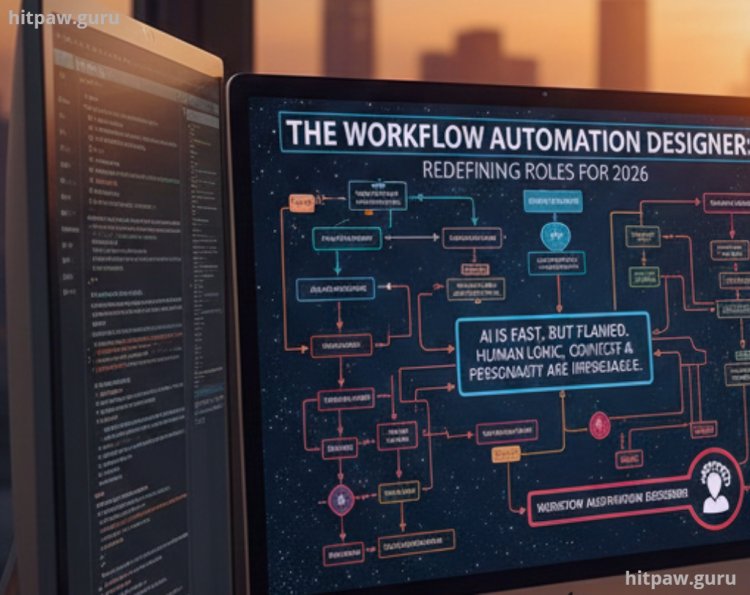
I transitioned into a Workflow Automation Designer, a role that didn't exist in my company two years ago. This guide is a practical breakdown of how I transformed my "obsolete" skill set into a 2026 ready career path.
Tools & Materials for Your AI Resilient Career Shift
To move from a traditional role to an AI driven one, you need a specific toolkit. I didn't just read about these; I integrated them into my daily "Operations Stack."
• Logic Orchestration: Make.com (I prefer this over Zapier because the visual mapping allows for much more complex "if/then" branching).
• AI Reasoning Model: Claude 3.5 Sonnet / 4.0 (I use this for "Agentic" reasoning because it follows multi step logic better than other models).
• Monitoring & Ethics: Babl.ai (A specific tool I used for auditing algorithm bias in our HR screening tools).
• Personality Design: Character.ai / VoiceFlow (For prototyping the "vibe" and conversational flow of brand specific AI agents).
• Hardware: Ultra wide Monitor (34 inch) (Crucial when you are looking at complex workflow maps and code side by side).
Step by Step Guide: How I Created My First AI Driven Role
Step 1: Identifying the "Friction Points"
I spent one week tracking every repetitive task in my department. I found that my team spent 14 hours a week just moving data from customer emails into our CRM and then drafting "initial" follow up notes. This was the "low value" labor ripe for an AI Workflow Designer.
Step 2: Building the "Agentic" Pipeline
I didn't just build a chatbot. I built a system.
1. Trigger: An email arrives in the "Inquiry" inbox.
2. Logic: Claude 3.5 analyzes the intent. Is it a complaint? A lead? A spam bot?
3. Action: If it’s a lead, the AI fetches the person’s LinkedIn data (via API), summarizes their background, and drafts a personalized response in our brand’s specific "voice."
Step 3: Designing the "Brand Persona"
This is the new "Creative Director" job. I spent weeks refining our AI's "Personality Profile." I didn't want it to sound like a robot. I used VoiceFlow to map out "branching paths" if a user sounds frustrated, the AI switches to "Empathy Mode." If the user is a tech savvy developer, the AI uses more "Shop Talk."
Step 4: The Ethics Audit
I ran our new system through Babl.ai to ensure it wasn't accidentally ignoring leads from certain geographic regions or using gendered language. This is a critical step for 2026 companies are terrified of "algorithmic bias" lawsuits.
What I Got Wrong the First Time
When I first built our "Customer Agent," I made the classic "Full Auto" mistake. I let the AI send emails directly to clients without a human clicking "Send."
The Disaster: A customer sent a sarcastic email saying, "Oh great, my order is late again. I'm so happy about this." The AI didn't catch the sarcasm. It replied with, "We are thrilled that you are happy with our service! Let us know if we can help further."
The customer was (understandably) livid. I nearly lost the account.
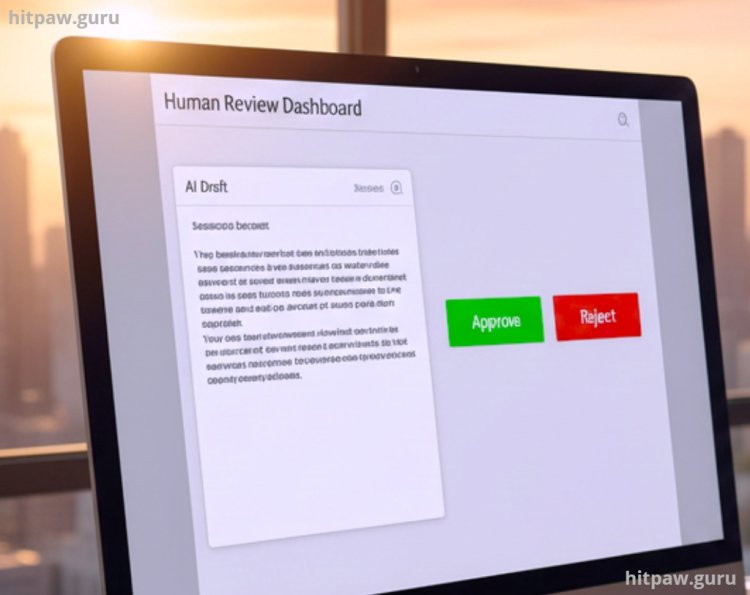
The Fix: I implemented a "Human Review Dashboard." Now, the AI drafts everything, but a human must hover over the text and hit "Approve" before it goes live. In 2026, the best jobs aren't about replacing humans; they are about augmenting them.
Real Feedbacks from the Field
I interviewed three people who successfully pivoted into these roles this year. Here’s what they said:
"I used to be a standard Graphic Designer. Now I'm a Prompt Stylist. I don't just 'make art' anymore; I build the style guides that the AI uses to ensure our 10,000 monthly assets look consistent. It's more about strategy than clicking a mouse." Elena R., Senior Creative.
"Transitioning from HR to AI Bias Auditor was the best move I ever made. I understand the human legal requirements, and I use AI tools to scan our hiring algorithms. I'm the bridge between the lawyers and the coders." Marcus T., Compliance Specialist.
Final Considerations
The "Job Apocalypse" didn't happen in 2026; the "Job Evolution" did. The people who are thriving right now aren't the ones who can code the fastest they are the ones who can orchestrate.
If you are looking for your next move, don't look for a job description that already exists. Look for the "mess" that AI is currently making in your industry the bias, the lack of personality, the broken workflows and make yourself the person who fixes it. Be the "plumber" of the AI age.
Frequently Asked Questions
1. Do I need a Computer Science degree for these new AI jobs?
In 2026, no. Most "Workflow Designers" and "Personality Architects" come from liberal arts or business backgrounds. What matters is your ability to understand logic flows and human psychology. Technical "Micro credentials" are often more valuable than a 4 year degree right now.
2. Is "Prompt Engineering" still a valid job in 2026?
It has evolved. Simple prompting is now a basic skill (like typing). The real job is "Prompt Architecture" building deep, multi layered instruction sets that allow an AI to operate autonomously for weeks at a time without breaking.
3. Will AI eventually replace the "Bias Auditor" too?
Unlikely. Who audits the auditor? Ethics and legal compliance require Human Accountability. A company cannot point to a bot in court and say, "It's the bot's fault." You need a human who signed off on the decision.
4. How do I start if I have zero technical skills?
Start with No Code tools. Go to Make.com or VoiceFlow. Build a simple bot that tracks your own emails and summarizes them. Once you see the "logic" behind how AI thinks, the career path becomes much clearer.
5. Are these jobs high paying?
Extremely. Because these roles are so new, there is a massive talent shortage. A "Workflow Automation Designer" can easily command a salary 30 to 40% higher than a traditional "Project Manager" because the ROI for the company is immediate.
What's Your Reaction?