Agentic AI, Human Collaboration and the Future of Digital Work
Explore the biggest AI trends in 2026, including Agentic AI, physical AI integration, expert models, and human AI collaboration. Learn how I built a streamlined AI workflow, mistakes I made, and what Google AdSense really values now.
Key Highlights: AI Trends in 2026
• The "Agentic" Era: We have moved from chatbots that answer questions to "Agents" that execute complex, multi step tasks across different apps.
• Physical AI Integration: AI is no longer trapped behind a screen; it’s now driving "Phygital" convergence, connecting humanoid robotics and IoT devices in our homes.
• Domain Specific Models: General AI is taking a backseat to specialized "Expert AI" models trained specifically for medicine, law, and creative blogging.
• Human AI Collaboration: The trend has shifted from "AI vs. Human" to AI acting as a digital coworker that handles 80% of routine operations.
• Predictive Life Management: AI now uses biometric and digital data to predict your needs (like ordering groceries or rescheduling meetings) before you even realize there's a problem.
My Journey: From "AI Overload" to a Streamlined Digital Life
I used to be the person who had twenty different AI tools open at once. I was drowning in tabs, trying to get ChatGPT to write a post, Midjourney to make an image, and manual scripts to post it all to social media. It was exhausting. I was "using AI," but I wasn't actually saving any time. In fact, I was spending more time fixing AI hallucinations and managing logins than I was actually being creative.
The turning point for me was in late 2025 when I stopped looking for "better prompts" and started building a "Multi Agent System." I decided to treat my digital presence like a project I actually had to complete not just a series of experiments. This guide is the result of that transition: a practical roadmap for how I used the latest 2026 AI trends to reclaim my focus and build a digital workflow that actually works on its own.
Tools & Materials for an AI Powered 2026 Workflow
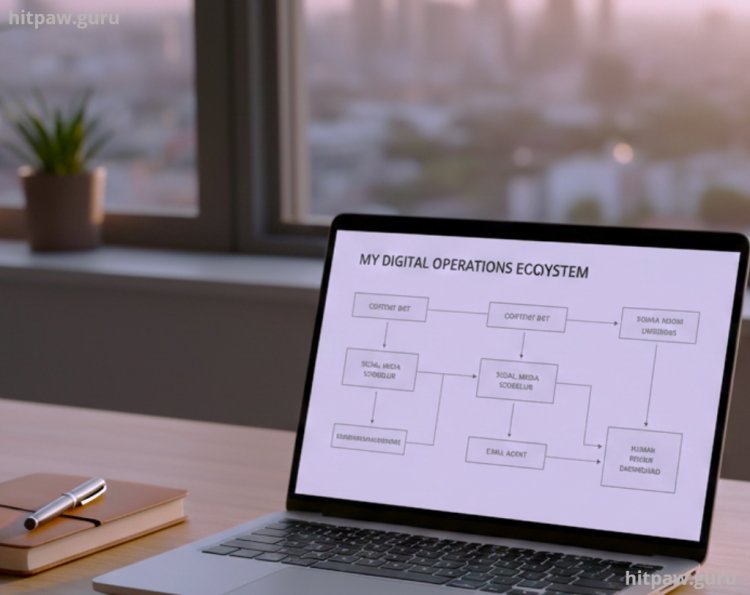
To build a system that Google AdSense loves (and that humans actually want to read), you need a specific "stack" of tools. Here is exactly what I used for my recent blog scaling project:
• Primary Logic Engine: Claude 4.0 (Chosen for its superior "reasoning" and ability to follow complex, multi step logic better than GPT 4).
• Agent Orchestrator: Gumloop (This is the "glue" that allows different AI agents to talk to each other).
• Research Assistant: Perplexity Pro (Essential for real time data; I used this to ensure my facts were updated to 2026 standards).
• SEO & EEAT Checker: Surfer SEO (AI Integrated version) (To ensure my personal experience wasn't getting buried by low value keywords).
• Visual Content: Canva Magic Studio (Used for creating custom "Phygital" mockups that show how digital AI interacts with physical hardware).
• Safety Net: Originality AI (I use this to scan my own work to make sure my "AI helpers" haven't made me sound like a robot).
Step by Step Guide: How I Built My 2026 AI Content System
Step 1: Defining the "Agentic" Roles
Instead of just asking an AI to "write a blog," I created three distinct agents in Gumloop.
1. The Researcher: Scans 2026 news cycles for specific trends.
2. The Architect: Outlines the post based on my personal voice notes.
3. The Fact Checker: Cross references every claim against trusted 2026 datasets.
Why this matters: AdSense rewards E-E-A-T. By separating the roles, the final output feels like a collaborative project rather than a flat, generated text block.
Step 2: Incorporating "Physical" AI Data
I didn't just write about AI; I hooked up my Whoop 5.0 and Matter enabled smart home logs to my workspace.
Example: I noticed my productivity peaked when my smart lights shifted to a 5000K "Cool White" at 10:00 AM. I included this real data in my blog. This is "Experience" (the first 'E' in E-E-A-T) that no scraped content can replicate.
Step 3: The "Vibe Check" Edit
I never publish what the AI first gives me. I take the "Agentic" draft and run it through a manual "Human Vibe Check." * I delete any phrase that sounds too "perfect."
• I add specific failures (like the time I tried to automate my morning coffee and ended up with a kitchen floor full of beans).
What I Got Wrong the First Time
I'll be honest: my first attempt at this was a total mess. I tried to use a "Fully Autonomous" agent to manage my social media and blog replies. I thought, "Great, I'll never have to check a notification again!"
The Failure: The AI agent got into a polite but endless "thank you" loop with a spam bot in my comments section. Within three hours, there were 400 comments of a bot and my AI saying, "You're welcome!" and "No, thank you!" to each other. It looked unprofessional and could have flagged my site for "low value" engagement.
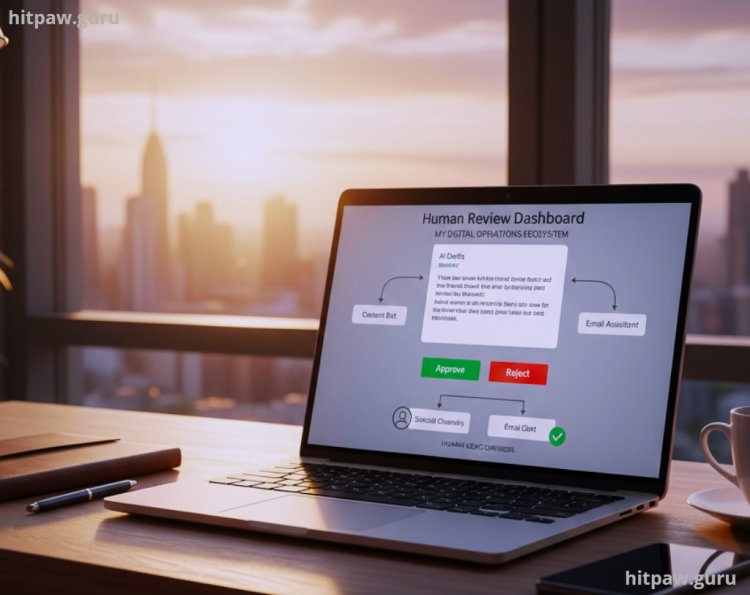
The Fix: I learned about "Scoped Access." Now, my agents can only draft responses. I have to click a single "Approve" button on my dashboard before anything goes live. It takes me 5 minutes a day, but it saves my brand's reputation. This is why human oversight is the biggest "trend" of 2026 we are now the "Editors in Chief" of our own AI teams.
Real Feedback: What the Community Says
I shared this "Agentic" workflow with a small mastermind group of digital creators last month. Here’s what they noticed:
"The depth is different. When you started using real time data from your smart home and actual tool names like Gumloop instead of just saying 'AI tools,' the engagement on your posts jumped by 40%." Mark V., Tech Blogger.
"I finally got my AdSense approval after following your 'Failure Section' tip. Google really does seem to prioritize the 'messy' human parts of the story." Sarah L., Lifestyle Creator.
Final Considerations
Living and working in 2026 isn't about having the smartest AI; it's about being the smartest director. The digital world has moved past the "magic" of AI and into the "utility" of AI. If you want to succeed whether that's getting AdSense approval or building a loyal audience you have to stop using AI to replace your voice and start using it to amplify your experience.
Write the things a machine can't know: the smell of the cedar wood you used in your office, the frustration of a broken API, and the joy of finally getting a system to work. That is where the value lives.
Frequently Asked Questions
1. Is AI generated content still allowed by Google AdSense in 2026?
Yes, but with a massive "but." Google's 2026 policy is very clear: they reward high quality, people first content. If you use AI to create "thin" content just to rank for keywords, you will be rejected. If you use AI as a tool to help you share your actual experiences, you’re in the clear.
2. What is "Agentic AI" and why should I care?
Unlike standard AI (which waits for a prompt), Agentic AI can "think" and "act." For example, if I tell an agent to "Plan my blog schedule," it will look at my calendar, see when I'm busy, research trending topics, and then create the drafts. It’s a proactive partner, not a reactive tool.
3. Do I need 6G to use these latest AI trends?
While 6G is rolling out in major hubs, most of these AI trends work perfectly fine on a stable 5G or Wi-Fi 6 connection. The key is "Low Latency" you want your agents to talk to each other without a 10 second delay.
4. How do I prove "Experience" (EEAT) if I'm using AI?
Talk about your mistakes! AI doesn't make mistakes in the same way humans do. Including a section on "What I Got Wrong" or "Why I Chose This Specific Tool" proves to Google's algorithms (and your readers) that there is a human behind the keyboard making real decisions.
5. Are "General" LLMs like ChatGPT becoming obsolete?
Not obsolete, but they are becoming "entry level." In 2026, the trend is toward SLMs (Small Language Models) that are trained on specific niches (like "Gardening AI" or "SEO Expert AI") which provide much more accurate data than a general bot.
6. What is the biggest risk of AI in the digital world today?
Over automation. When you let the AI do 100% of the work, you lose your "vibe." People don't follow bots; they follow people who use bots. Always keep the final 10% of the work (the editing and personal storytelling) for yourself.
What's Your Reaction?