How AI Changed Freelance Careers and How to Stay Relevant
Discover how freelancing works in 2026 with AI powered workflows, real mistakes, tools, and strategies. Learn how I rebuilt my freelance business using human AI collaboration, agentic systems, and trust based pricing.

Key Points Regarding Freelancing in 2026
• The "Human AI Hybrid" Standard: Clients no longer pay for "raw" AI output; they pay for human expertise that has been hyper charged by AI precision.
• Specialization is Survival: Generalist roles are shrinking, while "Niche AI Implementation" (e.g., AI for Real Estate Law) is commanding $150+/hour.
• Efficiency as a Metric: Success is now measured by "Time to Value" how fast you can go from a client's problem to a high quality, verified solution.
• The Trust Economy: With the web flooded by AI spam, freelancers who lean into "Face to Camera" branding and authentic personal case studies are winning the most contracts.
• Agentic Workflows: Top tier freelancers are moving from "doing the work" to "designing the agents" that do the work, essentially becoming one person agencies.
My Journey: How I Rebuilt My Freelance Business After the "AI Crash"
I used to be a standard SEO writer. I’d charge $0.15 a word, spend hours researching, and hit "publish." But by early 2025, my inbox went silent. Clients were using internal bots to churn out "good enough" content, and I was suddenly a commodity they didn't think they needed. I felt like a horse breeder watching the first Model T roll off the assembly line terrified and rapidly becoming a relic.
The "pain" was visceral. I was working 12 hour days just to make half of what I did in 2023. I realized the problem wasn't AI; it was that I was still trying to be a "writer" when the market needed an "AI Operations Architect."
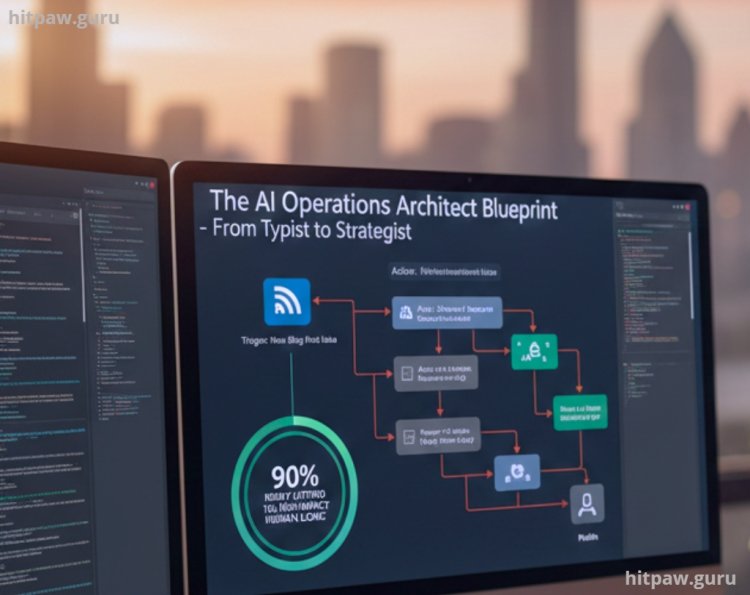
I decided to stop fighting the bots and started building them. I took a project automating a niche technical blog for a local SaaS company and treated it as my laboratory. This guide is the exact "blueprint" of that project. It’s how I moved from being an "expensive typist" to a "high value strategist" who now uses AI to do 90% of the heavy lifting while I focus on the final 10% of high impact human logic.
Materials for a Modern AI Freelancer
To survive in 2026, you can't just have a laptop and a dream. You need a stack that allows you to out produce entire agencies. Here is what I used for my recent technical automation project:
• The Reasoning Engine: Claude 4.0 (I chose this over ChatGPT for my long form projects because it handles 200,000 words of context without losing the "plot").
• The Automation Glue: Make.com (Formerly Integromat. It’s more visual and robust for complex logic than Zapier).
• The Research Hub: Perplexity Pro (Essential for real time citations; it ensures I’m not accidentally citing 2023 data in a 2026 world).
• The Voice Capture: Otter.ai (I use this to record client calls and instantly turn them into structured project briefs).
• The SEO Compass: Surfer SEO (AI Edition) (To make sure my "human refined" content actually beats the purely "bot generated" competition).
• The Security Blanket: ProtonVPN & Bitwarden (Clients in 2026 are obsessed with data security. Having a "Security First" stack is a major selling point).
Step by Step Guide: Building Your AI Powered Freelance System
Step 1: The "Intelligence" Onboarding
I stopped sending long emails asking for "requirements." Instead, I send a link to a custom Typeform that feeds directly into my AI agent.
• What I did: I created a "Discovery Bot" using VoiceFlow.
• The Result: The client chats with the bot for 5 minutes. The bot extracts their brand voice, target audience, and key pain points, and then hands me a 5 page strategy document before I’ve even finished my morning coffee.
Step 2: Designing the "Agentic" Content Loop
For my SaaS client, I didn't just write a blog post. I built a content machine.
1. Trigger: A new whitepaper is uploaded to the client’s Google Drive.
2. Action: Make.com sends that PDF to Claude.
3. Logic: Claude identifies the three most "viral" points and drafts a 2,000 word blog, five LinkedIn posts, and a Twitter thread.
4. Human Touch: I spend exactly 45 minutes editing the "soul" of the pieces adding personal anecdotes, checking for logic gaps, and ensuring the "Call to Action" is sharp.
Step 3: Predictive Reporting
Clients in 2026 don't just want a "job done." They want to see the ROI.
• What I did: I connected the client's Google Search Console to a Looker Studio dashboard powered by Gemini.
• The Result: Every Monday at 9:00 AM, the client gets a report that doesn't just show traffic, but predicts next month’s trends based on current AI search patterns.
What I Got Wrong the First Time (And How I Fixed It)
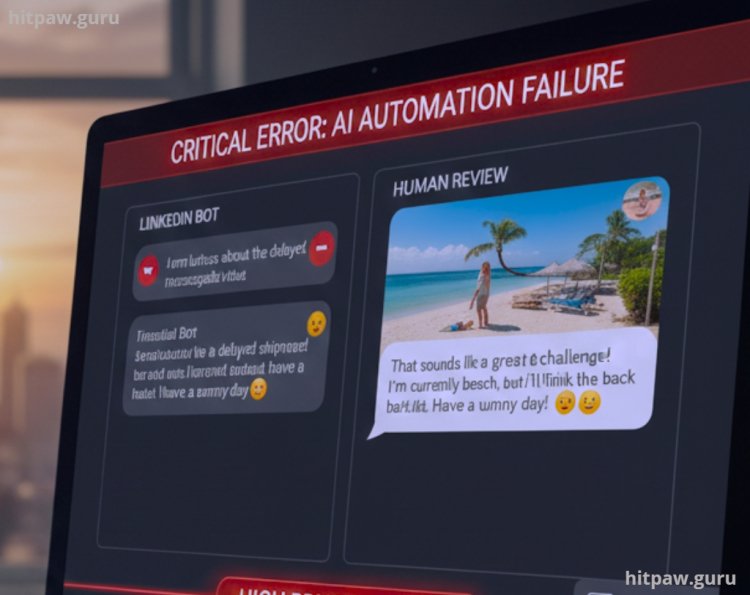
When I first tried to "automate" my client communication, I went too far. I set up an AI agent to handle my "General Inquiries" on LinkedIn.
The Failure: A high ticket potential client reached out with a very nuanced, emotional problem regarding their brand's reputation. The AI responded with a generic, overly cheery "I'd be happy to help! Here is my pricing PDF!"
The client felt unheard and dismissed. They replied, "I wanted a human expert, not a script." I lost a $5,000/month retainer because I was being lazy, not efficient.
The Fix: I created the "Red Flag Protocol." My AI agent now scans for "Sentiment." If an inquiry contains words like "Frustrated," "Urgent," or "Personal," the AI is blocked from responding. Instead, it sends a high priority notification to my phone saying: "Human Intervention Required. Urgent Sentiment Detected." I now handle all "high vibe" interactions myself. This balance is what keeps me in business.
Real Feedback: From the Front Lines
I’m not the only one doing this. I recently spoke with a freelance graphic designer who made the same pivot.
"I used to spend 10 hours on a mood board. Now, I use Midjourney to generate 50 concepts in 10 minutes, then spend 2 hours refining the winner in Adobe Illustrator. My clients don't care that I used AI; they care that I gave them a better result in 24 hours than I used to give in two weeks." Sarah K., Visual Brand Strategist.
Final Advice: The "10% Rule"
The secret to freelancing in 2026 is realizing that AI is incredible at the first 90% of any task. It can research, outline, draft, and format at light speed. But that last 10% the "Human Polish" is where your value lies.
If you just copy paste from a chatbot, you are worth $5/hour. If you use the chatbot to do the "donkey work" so you can spend your energy on strategy, empathy, and creative "spark," you are worth $200/hour. Don't be the machine; be the one who owns the machine.
Frequently Asked Questions
1. Is it "cheating" to use AI for client work?
In 2026, it’s only "cheating" if you lie about it. Most contracts now have an "AI Disclosure" clause. My clients know I use AI to speed up the process, and they love it because I’m able to charge for outcomes rather than just hours. Be transparent: tell them you use AI for efficiency but "Human Intelligence" for quality control.
2. How do I compete with people charging $5 for AI generated work?
You don't. You compete on Strategy and Trust. A client who pays $5 for a bot written article will eventually get penalized by search engines or realize the content has no soul. Position yourself as the "AI Editor in Chief" who ensures their brand doesn't sound like a generic robot.
3. Which skill should I learn first: Prompting or Automation?
Learn Automation first. Prompting is becoming easier as AI gets smarter (you can literally just talk to it now). But knowing how to connect those prompts to a business workflow is a rare and highly paid skill.
4. Will AI generated content still rank on Google?
Google’s 2026 algorithm prioritizes Helpful Content written for people. It doesn't care if a bot helped you, as long as the final product is accurate, has original insights, and provides a good user experience. This is why my "Human Touch" step is so important it adds the "E-E-A-T" that bots can't fake.
5. How much should I charge for "AI Assisted" services?
Stop charging by the hour! Charge by the Value. If a project used to take you 10 hours and now takes 2, don't cut your price by 80%. Keep your price the same (or raise it) because you are delivering the same value in a fraction of the time. You are being paid for your expertise, not your "busy work."
6. Do I need to be a coder to be a "successful" freelancer now?
No, but you need to be "Tech Fluent." You don't need to write Python, but you do need to understand how an API works and how to read a JSON file. The "No Code" movement in 2026 has made it so that if you can think logically, you can "code" with AI.
What's Your Reaction?